Posts

Herbal Medicine & Magick: Burdock
Image
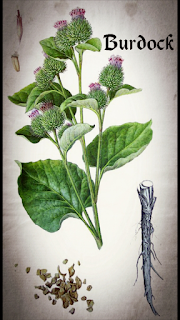
Burdock - Arctium Lappa Native to Eurasia, Burdock has been widely distributed throughout Europe and the United States. Known by many names, including Bat Weed, Great burdock, Gobo, Goboshi, Bardana, Beggars buttons, Burr, Clot burr, Cockle buttons, Common burdock, Edible burdock, Fox clote, Great bur, Happy major, Lappa, Love leaves, Personata, Pholanthropian, Nill band zi, Thorny bur, Herrif, Aireve, or Airup. Burdock was once commonly implemented in folk medicine as a means to treat and cleanse the blood, to relieve constipation, and break up kidney and bladder stones. Burdock aids in easing the pains associated with the labors of childbirth, and has been used to cleanse the blood of the microorganism that causes Syphilis. Burdock also assists in relieving stomach and intestinal disorders, and helps in controlling arthritis and gout pains. Furthermore Burdock has been used in the treatment of coughs, colds, flu and other throat and chest ailments; it promote...

Grounding, Centering & Shielding: Three Basics to Magic

Image
Grounding, Centering &  Shielding: Three basics to magic Every time I read information about the practice and importance of Grounding, Centering and Shielding I find that the articles are inadequate to some degree. These three practices are crucial for every practitioner to thoroughly understand and implement daily. Thus I venture here to describe the first three basics for beginners. Grounding The daily practice of Grounding is important for keeping your energies balanced. Throughout the day you feel, experience, absorb, respond and react to a variety of energies and frequencies; it is necessary to ground these out. The Earth carries a constant and renewing source of energy in her core at all times. The Earth is our Mother above all and here to sustain all life she has grown, including you. Like the trees and plants, we too have roots in which we can absorb the earths energy through. These roots are a highway for our energy and Earths energy to exchange....

Herbal Witchcraft: Angelica

Image
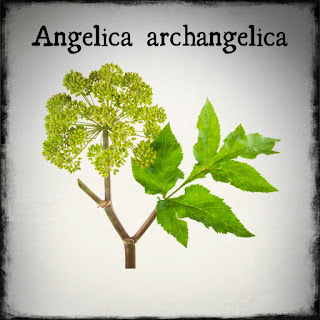
Angelica Archangelica Native to the north and north-eastern Europe, Iceland, Greenland, Russia and the Himalayas; Angelica also grows wild in Scandinavia and north Asia. Recorded in ancient texts and implemented as medicine in Iceland for more than 1,100 years, Angelica was once even forbidden by law to steal.  Commonly grown in personal gardens for the health of the home, Angelica was believed to protect against evil, illness and the plague. Angelica contains components that aid in stimulating digestion, help to lower blood pressure, regulate menstruation, aid in childbirth, ease cramps and pains related to periods and gas, help calm stomach ulcer inflammation, and relieve symptoms related to the cold and flu. Angelica is an antimitotic, antiproliferative, chemopreventative, antiulceragenic, antibacterial, antiviral, antitumor, antitussive, emmenagogue, diaphoretic/sudorific, aromatic, bitter, carminative, cordial, expectorant, nervine, stimulant, stomachic, a...

Witchcraft: Solar Eclipse Energy

Image
On August 21, 2017 there will be an eclipse. But not just any eclipse, a total solar eclipse. What does this mean for Witches, and Magick? It means that for a moment in time, "time" as we know it halts. For less than a minute, supercharged Energy is available and this window is more powerful than either the Spring or Fall equinoxes. In this second of time, Earths Energy equals that of a total annual cycle of all Seasons, in addition to the unification of Solar and Lunar Energy. This unique eclipse is occurring during the waning period of the year, as we are on the side of the Summer Solstice in which Winter is nearing. It is appropriate during this time to rid oneself of the negative, unwanted, unhealthy, baneful, and otherwise dead things and Energies that are in our life. During the eclipse, it is good to be completely attuned to the Earths Energy of ALL four seasons, and to be capable of working with this amount of Energy in your small window of time. Be p...

Holidays: Lughnasadh

Image
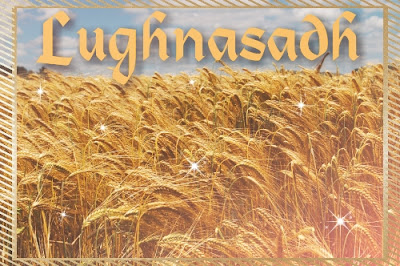
Lughnasadh, pronounced  "Lúnasa" in Irish, is originally a Gaelic festival marking the beginning of Fall and is the first of the three Harvest festivals (Samhain being the third and last). Traditionally celebrations began on the eve of August 1st. Lughnasadh means "commemoration of Lugh" however, according to ancient myth, Lugh (pronounced "Loo") honored his foster mother Tailtiu (Tailte,  also known as Talti)  on this day; after she died of exhaustion from having cleared the fields of Ireland for mankind to cultivate. Lughnasadh marks the beginning of Fall, when the Suns descent towards the dark days of winter becomes noticeable. The first fruits of Summer are ready for harvest, as are the grains. The essence of this festival is joy of life, celebrating what Summer is giving us, and appreciating the warmth of the Sun before Winter starts slowly drawing nearer. Traditionally Lughnasadh was celebrated in Ireland, Scotland, and the Isle ...

Herbal Medicine: Eucalyptus

Image
Eucalyptus globulus; native to Australia, it is one of the most widely cultivated trees on earth. Traditionally used by the aborigines for treating fevers, and for chewing the roots for hydration. Eucalyptus was naturally distributed throughout Tasmania and southern Victoria, with isolated occurrences on King island and Flinders island; naturalized in Spain, Portugal, Cyprus, southern Africa, New Zealand, Macaronesia, Hawaii, California, and western Georgia. Eucalyptus has been used as medicine for hundreds of years. In traditional Chinese medicine, among other uses, it is implemented topically in massage, as a hot compress, added to the bath water, in skin care; as well as through direct inhalation, diffuser & vaporizer methods. Eucalyptus was found to be beneficial in the treatment of Whooping cough and Emphysema through steam inhalation by 19th-century American doctors. In 1855, the French government sent Eucalyptus seeds to Algeria to aid in the eradication...

Herbal Medicine: Dandelion

Image
Dandelion, Taraxacum officinale, has been found recorded in medicinal use since 659 BCE. Native to most of Europe, Asia, and northern Africa; Dandelion has been naturalized world-wide. Mostly viewed as a weed by society, its medicinal qualities are only known to those of us in pursuit of the knowledge and use of herbs as medicine. Historically added to Spring salads as an aid in digestive, kidney, & immune support after a long hard winter surviving mainly on preserved foods. Dandelion was consumed in small quantities in ancient Celtic, Roman and Greek civilizations to help balance ones appetite for the various foods offered in the meal. In northern America many Native American tribes implemented Dandelion for various uses as medicine including a detox cleanse, as a healing poultice or compress, in a decoction to ease stomach upset, ingesting the leaves for alterative effects, steaming the leaves and applying them topically for the treatment sore throats, in a tea a...

Herbal Medicine: Clove

Image
Clove (Syzygium aromaticum); in Latin is "Clavus," meaning Nail. Clove is native to the Maluku Islands in Indonesia. First introduced in Europe in the 4th Century AD as a "Luxury" spice, the Cloves origin was kept a secret. Fought over for hundreds of years, Clove was once as valuable as oil. The current main producers of Clove are Indonesia and Madagascar. The first recorded history of Clove as medicine is in 240 BC, used in Chinese medicine as a treatment for diarrhea, hernias, and more. Ayurvedic medicine incorporates Clove for bad breath, tooth decay, and halitosis. Clove was traditionally implemented to prevent nausea and indigestion, to relieve hiccups, and enhance blood circulation & liver function. The Clove tree can reach up to 12-15 meters in height, and it is the immature flower buds that we harvest and use for medicinal and culinary purposes. The essential oil of clove is derived through distillation. The leaves, stems an...

Herbal Medicine: Bay Laurel

Image
Bay Laurel, native to the Mediterranean and Asia Minor, has been in medicinal use for hundreds of years. Cultivated in Britain since the 1500's, Bay Laurel was also well renowned by ancient Greek and Roman cultures. Seen as noble, wreaths were made of the leaves to adorn the heads of the victorious. Dioscorides implemented the leaves, berries, and roots of Bay Laurel in medicine; he believed the leaves to be a vomitive, the berries pectoral, and the roots to alleviate kidney stones. Galen considered Bay Laurel to be a good remedy for liver ailments. St. Hildegarde described the plant to have multiple medicinal uses in the treatment of fevers, asthma, migraines, gout, palpitations, angina pectoris, and liver & spleen afflictions. In medieval times, monks recorded Bay Laurel as a medicine for relieving stomach problems, colic, & renal disease. Bay Laurel is an analgesic, aromatic, emetic, emmenagogue, diuretic, stimulant, carminative, expectorant, sudorific, ...

Herbal Medicine: Mugwort

Image
Common Mugwort The term "Mugwort" is applied to at least ten species of Antemisia, therefore in this blog I am covering the medicinal use of Common Mugwort: Antemisia Vulgaris, aka "St. John's Herb." Native to Europe, Mugwort has been used for its medicinal qualities since at least the 1st Century AD. Mugwort was mentioned frequently in ancient Greek and Roman documents; and it was commonly planted along Roman roadsides for travelers and soldiers to pick and stuff into their shoes/sandals when their feet felt weary. Mugwort was valuable in early Druidic and Anglo-Saxon medicine as one of nine herbs implemented to combat evil & poison. Mugwort was added to beers as flavoring before hops became widely used. The leaves and stems are used in medicine for a digestive tonic, as a diuretic, nervine, emmenagogue, and antirheumatic. Mugwort is helpful with mild depression, nervous tension, calming anxiety, as a sedative and sleep aid, a...

Herbal Medicine: Calendula

Image
Calendula Officinalis Native to Southwest Asia, West Europe, the Mediterranean, and Macaronesia; Calendula has been in use as a medicine since at least the 11th Century. The Ancient Egyptians believed that Calendula contained sacred  revitalizing properties. Calendula is known as "Ropana" in Ayurvedic medicine, which means "one which heals wounds." It is used for vulnerary, as an antispasmodic, alterative; and used on minor wounds, as an eye wash, to soothe bee stings, & for digestion disturbamce. The Chinese incorporated Calendula to move stagnant blood and increase circulation to the skin. The Native Americans employed Calendula to calm stomach upset. Calendula is very popular in Middle Eastern and Mediterannean cuisine, as well as in stews & soups in Germany; which is where it got its nickname "Pot Marigold." Calendula was historically used as a liver and gall bladder cleanse. Calendula is a diuretic, detoxifie...

Herbal Medicine: Vervain

Image
Native to most of Europe, the Mediterranean, China, Japan, North Africa; Blue Vervain native to the northern United States & Canada. Vervains scientific name is "Verbena Officinalis," a.k.a. "Enchanters Plant." Vervain has been used for thousands of years by European Herbalists, and extensively used as  a medicine. In China, Vervain was implemented as a fever remedy. The Aztecs used the mashed roots for urination stimulation. Native American tribes used Vervain for treating circulatory problems, headaches, insomnia, hepatitis, stomach aches, "fits," for clearing up cloudy urine, as a snuff to stop nose bleeds, & for stomach worms in children. Historically Vervain has also been used in treating jaundice. Vervain is a diaphoretic, expectorant, antispasmodic, bile stimulant, laxative, liver restorative, nervine, antiperiodic, vermifuge, anthelmintic, aphrodisiac, astringent, emetic, emmenagogue, febrifuge, galactagogue, relaxa...

Herbal Medicine: Valerian

Image
Native to Europe and Asia, Valerian has been used in traditional herbal medicine for centuries. The earliest recorded history of the use of Valerian in medicine begins in ancient Greece and Rome. Greek physician Dioscorides implemented Valerian for treatments of liver problems, urinary tract issues, conditions effecting the digestive system, and even as an antidote for poisons. In traditional Chinese medicine, Valerian was and still is used for strengthening the mind, promoting awareness, & for sleep. Reportedly Valerian is where the prescription drug "Valium" gets its name from; however, more than 80 over-the-counter sleep-aid medications contain Valerium. Historically used for its sedative properties, Valerian has been shown that mid - to long - term use decreases insomnia symptoms, as well as improving quality of sleep. Native Americans also used Valerian chewed to treat earaches. It relieves stress & anxiety, as well as aiding in curing addiction prob...

Herbal Medicine: Motherwort

Image
Native to Eurasia, Motherwort has been in medicinal use since at least the 16th Century. Used in ancient medicine by the Chinese; Motherwort was believed to lengthen the lifespan. Early Greeks and Romans used Motherwort for treating heart palpitations and depression. There's an old tale, according to legend, of a village which received its water supply from a river which ran through beds of Motherwort. It is said the Villagers lived to the ripe age of 130 years; and one who lived to 300. Out of all the ancient cultures that used Motherwort, the Cherokees treated nervous afflictions with it. Motherwort is mainly used for aiding women in fertility, to promote menstruation, and to aid in expelling afterbirth. Furthermore, Motherwort helps reduce anxiety in laboring women, aids with postpartum depression, & relieves symptoms generally associated with Menopause. In fact, Motherwort got its name from its medicinal help with childbirth pains, and easing anxiety associated...

Herbal Medicine: Garden Sage

Image
Among all the plants and their various medicinal uses, Sage should not be overlooked. With properties including antibiotic, antiseptic, astringent, antiallergic, and antispasmodic; Sage has a lot of good medicine to offer us! Native to the Mediterranean, Sage was considered sacred to the Romans. In the 1st century C.E. Sage was noted by the Greek Physician Dioscorides to have stopped wounds from bleeding, and to clean ulcers and sores. Furthermore, he noted that Sage juice in warm water effectively treated sore throats & coughs. Cultivated in ancient monestary gardens, Sage has been considered invaluable by traditional healers for centuries. Used in oral health, keeping peoples mouths clear of infection. Sage has been implemented externally for the treatment of sprains, swelling, ulcers and bleeding. Internally, Sage is useful for treating rheumatism, nervous system support, reducing delirium associated with fever, reduces night sweats, dries up a mother's milk whe...

Herbal Medicine: Lavender

Image
Lavender! Oh how I love this plant! A favorite of mankinds for more than 2,500 years; favored by royalty throughout history. But aside from smelling lovely, and having the calming effect that helps when we're stressed or in need of sleep, what else is Lavender good for? Well, MANY things actually! Native to the Mediterranean, the Arabian Peninsula, and Russia; cultivated in Europe, Australia and the U.S. Lavender has a very long history being used as medicine. Lavender has been implemented in wound care, as a sleep aid, for pain associated with headaches and migraines, as a mood elevator for those who experience depression, the list is extensive... The Egyptians loved Lavender so much that, not only were the royal Egyptian families buried with jars of it, it was also used in the mummification process. Carried by Roman soldiers for treating battle wounds in the field. In European folk medicine, Lavender was also administered to treat worms in children. Used for scenting...

Rosemary's Incredible Use as Medicine

Image
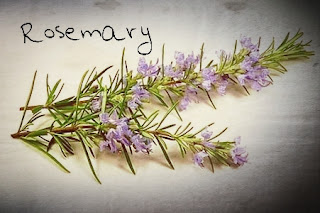
Native to the Mediterranean and Southern France, Rosemarys incredible use in medicine predates the middle ages. Favored in early apothic gardens, Rosemary was once used to ward off the Black Plague by burning it in the home, and wearing it in a pouch to sniff when navigating through suspicious areas. The Greeks associated Rosemary with memory recall, and scholars often wore it atop, or around their heads as wreaths, during exams. Rosemary has been considered a symbol of remembrance, friendship, love & loyalty since ancient times. Egyptian pharaohs were buried with Rosemary. Reportedly, Queen Elizabeth of Hungary cured herself of partial paralysis in 1235 by massaging wine-soaked Rosemary leaves into her joints. During WW2 the French burned Rosemary leaves mixed with Juniper berries in field hospitals to kill germs. Rosemary has been implemented topically for various ailments. Used as an essential oil it increases blood flow to a wounded area, works as an analgesic, ...